The Challenge
TR Capital raises from a demanding audience. Institutional partners and accredited investors who underwrite a firm before they commit a dollar. They read the deck, then they read the website, and the two have to agree.
For ten years the firm had built ultra-luxury homes in Palm Beach County under the name T&R Development. By 2025 it had launched a property management arm and expanded into multifamily.
The track record was proven. The brand underneath it had not kept pace with what the firm was becoming. As the work moved from building homes to allocating institutional capital, the question stopped being "can they build" and became "does the brand read like an asset manager an institution can underwrite." The name still said developer. The firm was raising like a fund.
The Strategy
The frame: TR builds the assets it asks investors to back. One name could not carry that. The developer who sells homes to families and the asset manager who raises capital from institutions want different things from a brand. So we split the firm into a parent and an operating brand.
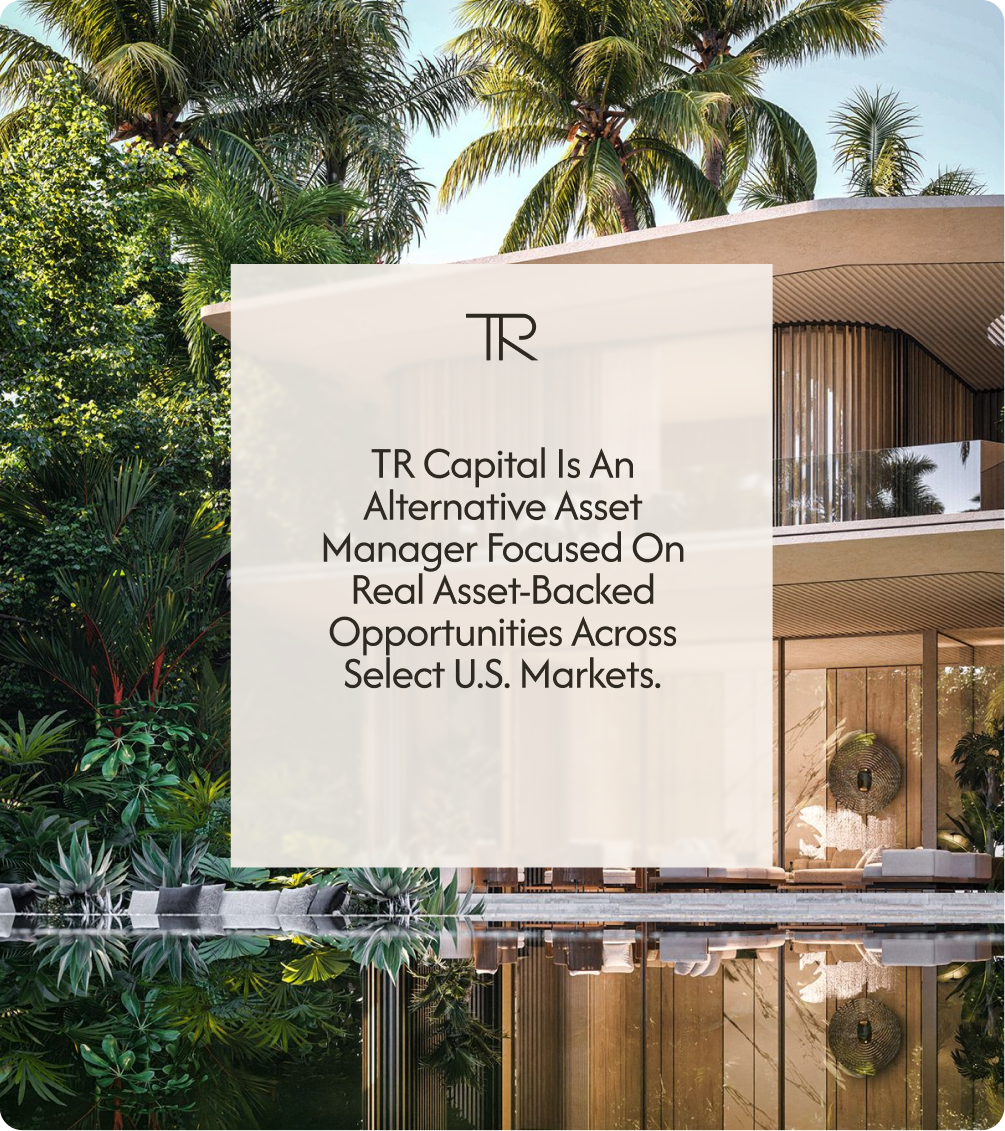
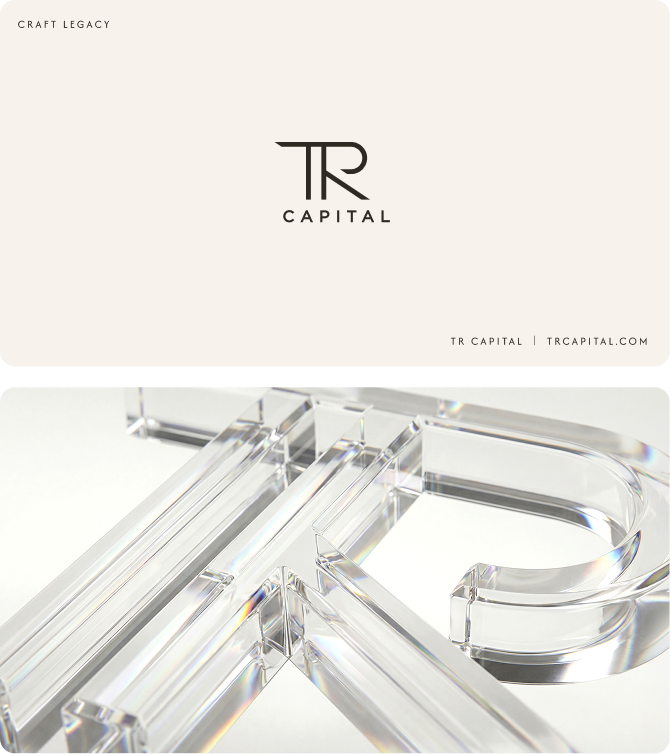
TR Capital became the institutional parent. An alternative asset manager running real-asset-backed strategies across residential and related sectors. TR Develop became the operating brand, carrying the heritage that makes the parent credible: the homes, the renderings, the decade of delivery. TR Capital faces the investor. TR Develop faces the market. The shared TR root keeps them one firm.
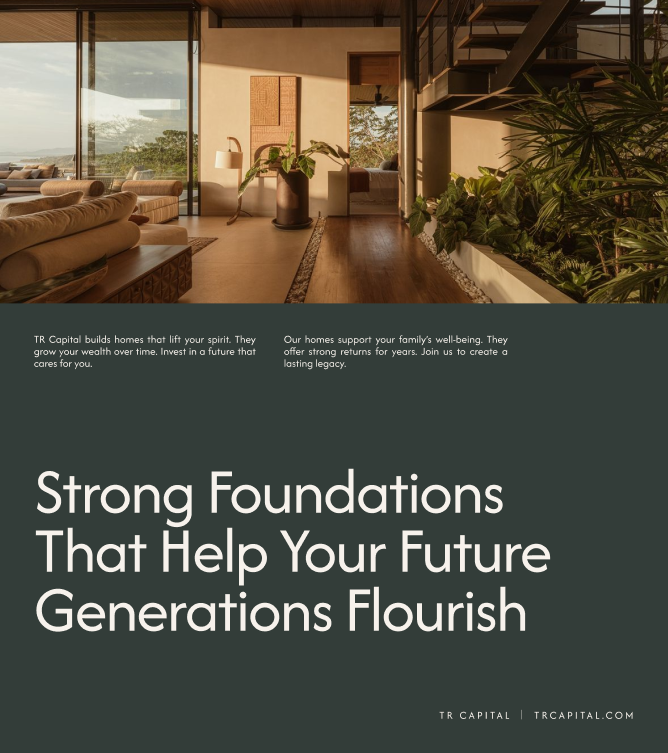
The sub-brand is the proof. An asset manager asks an institution to trust its execution, and TR Develop shows the execution in full. 232 Linda Lane. The Wellington pipeline. The move into multifamily. The homes are the evidence the fund can build what it promises.
The Identity System
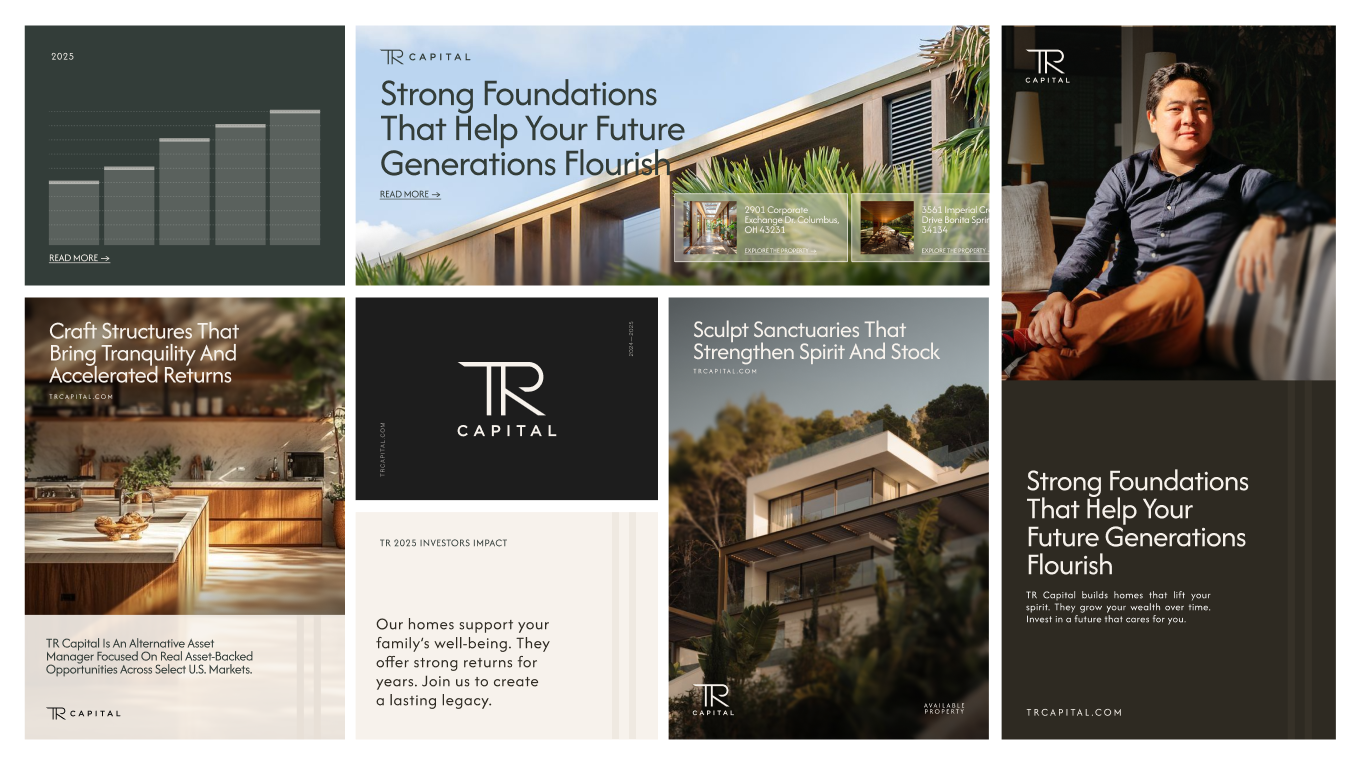
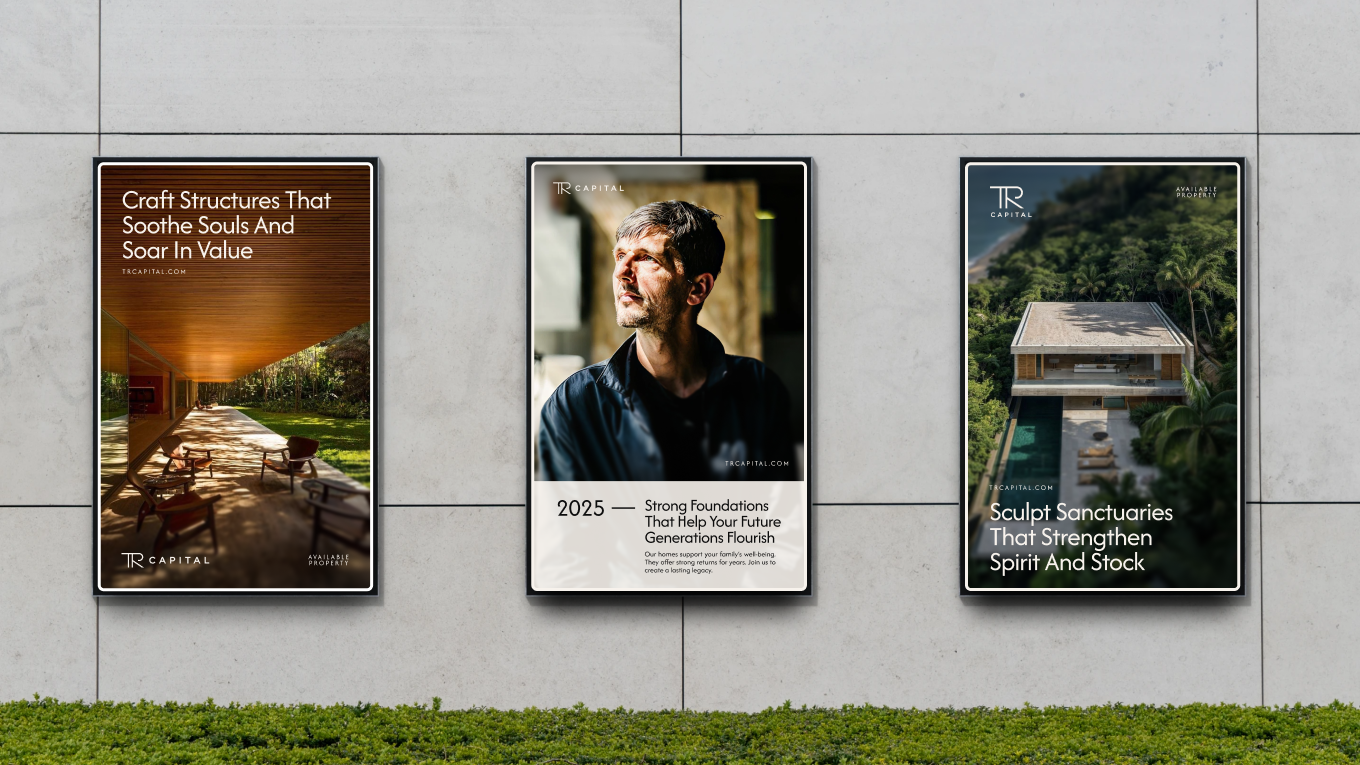
One root, two postures. The institutional system is restrained and research-led, built for a reader deciding whether to wire money. The operating system is property-forward, organized around listings, renderings, and the detail a buyer or partner studies before they commit. The shared mark holds the family together while the temperature shifts to match each audience.
The work had a constraint built in. SEC rules limit what an asset manager can promote in public. No advertised returns. No fund-manager role on the open web. We treated the constraint as the brief. The TR Capital site states strategy, heritage, and discipline, then routes the qualified reader to the investor portal and lets everyone else move on.
Applications
Two sites, a gated portal, and the architecture holding them together.
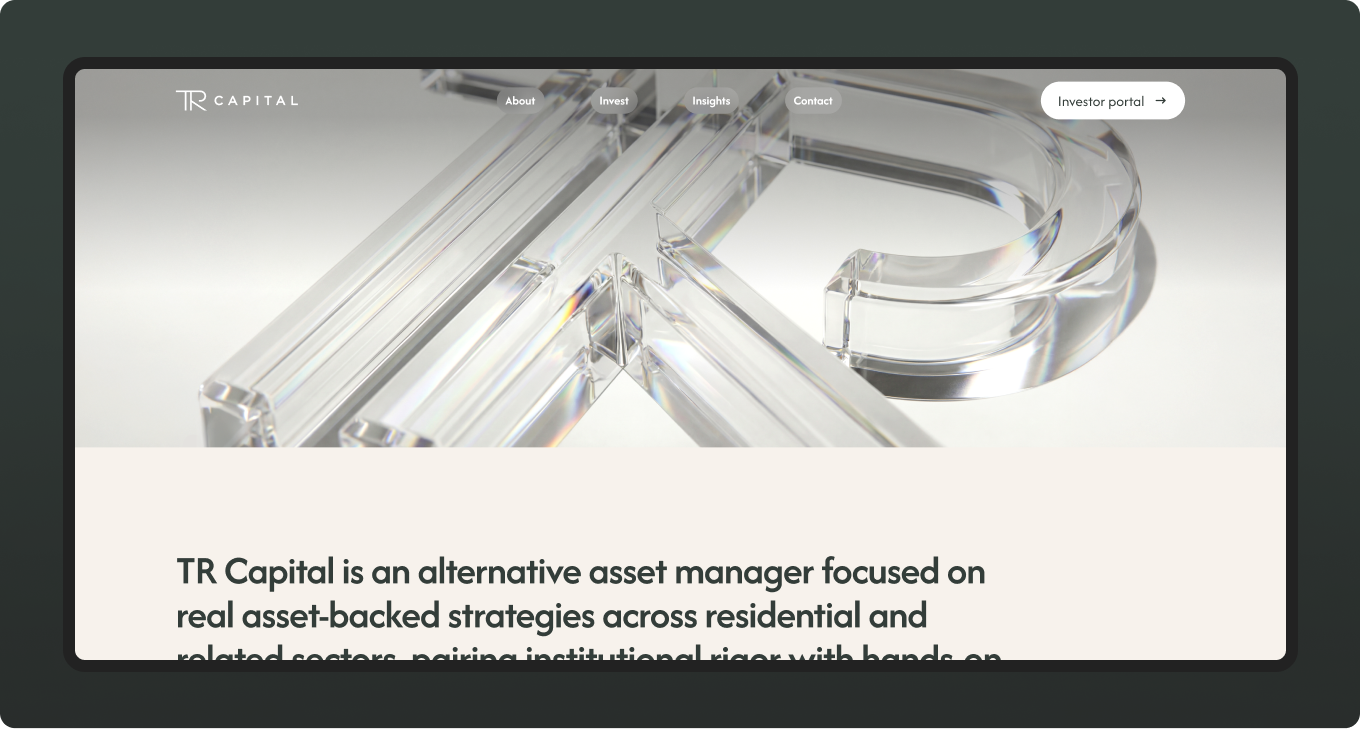
TR Capital website. Strategy, heritage, and a clear path to the investor portal.
Investor portal. A gated login that keeps fund material behind the wall the firm's compliance posture requires.
TR Develop website. A property-forward site organized around current projects, sold work, and the multifamily pipeline, with full listing detail for each home.
Brand architecture. Parent and operating brand under one root, with TR Property Management nested beneath the developer.
Compliance-aware messaging. Public copy that reads premium and serious without promoting returns or the fund-manager role.
The Result
The firm now presents as what it is. A developer with a decade of proof, and an asset manager raising its next fund, under one architecture that lets each brand do its job.
The brand architecture is now the connective tissue between the firm's operating heritage and its institutional future. Two brands, one root, built to be underwritten.