

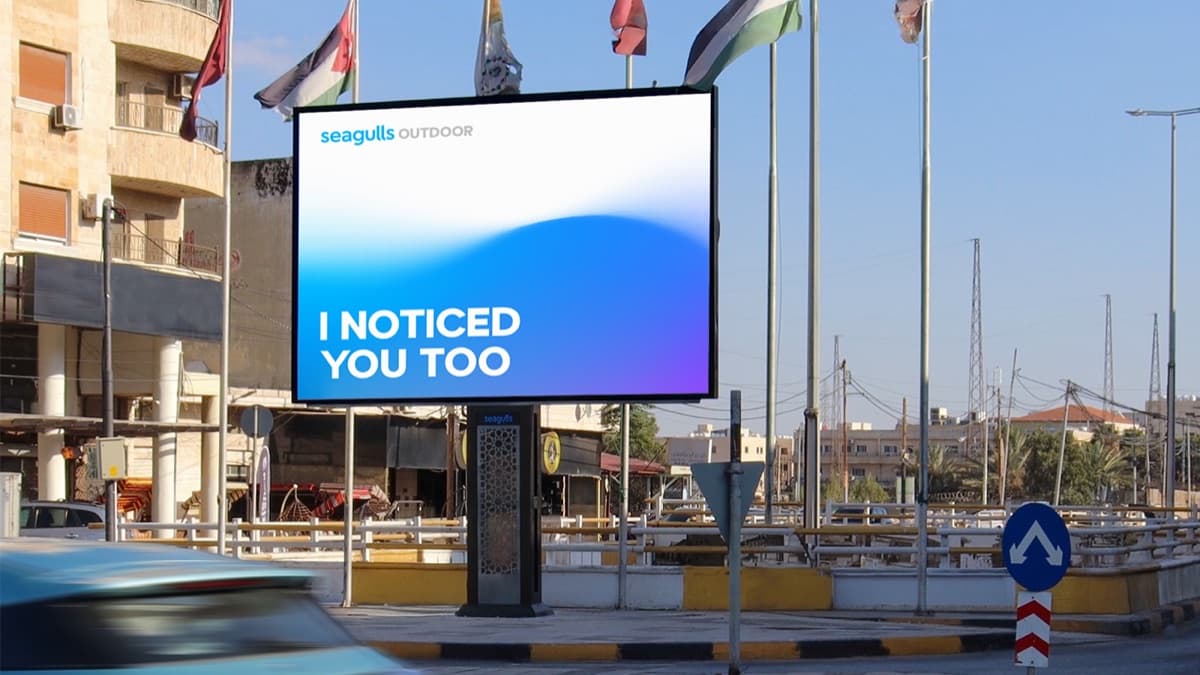
Brand Recall.
Snickers owns hunger. Red Bull owns exhaustion. Corona owns the beach. How brands train a feeling to summon a name, why recall beats recognition, and why the ninety-five percent who are not buying today decide whether you win tomorrow.
Read the full transcript
Cold open
Get hungry. Really hungry, where you cannot concentrate and you need a snack. What chocolate bar just showed up in your head? For a lot of you, it was Snickers. Now it is three in the afternoon and you are fading. Or maybe you are about to jump out of a plane and you want an edge. Either way, you have nothing left in the tank. What do you reach for? A lot of you just thought of Red Bull. Now picture a beach. Sun, sand, nowhere to be. There is a cold bottle of beer in your hand with a wedge of lime pushed into the top. What is it? Corona. Notice what happened. You did not weigh options. You did not compare features. A feeling showed up, hunger, exhaustion, escape, and it reached into your memory and pulled out a brand. That is brand recall. And none of it was an accident. Those brands trained you, on purpose, for years, until the feeling itself does the selling for them. This is episode ten. Brand recall.
Welcome
I'm John Luke. Welcome to Position to Win. There are two types of brands, the ones that accept their position in the market, and the ones that challenge it. This show is for the challengers, and for the founders and CMOs who are the ones responsible for making that happen.
The Quiet Asset
For nine episodes we have been building a brand. A character in episode eight. A way to persuade in episode nine. All of it rests on one quiet thing almost nobody checks. That when the moment comes, the customer thinks of you at all. Because memory has its own rules. Recall is the quiet asset. But powerful. It decides who gets to compete for space in the customer's head. The best argument in the world loses to the name that arrived first.
Two Kinds Of Awareness
Let's get the words right, because they get used interchangeably and they do different jobs. There are two kinds of awareness. Recognition and recall. Recognition is prompted. The brand is put in front of you and you know it. Shelf, feed, search results, it feels familiar. You walk down the street and you know that person's face. Recall is beyond that. It is unaided. Nobody shows you anything. You are handed a category, a problem, a need, an occasion, and a brand comes back out of memory on its own. The need is the only prompt you get. Which means the need is doing the retrieving. Then there is top of mind, the first brand retrieved. And first is not a small edge. The brand recalled first gets considered when the others do not. Zoom out and there is a bigger idea under all of it, and Ehrenberg-Bass splits it in two. Mental availability, how easy you are to think of and to recognize. And physical availability, how easy you are to find and to buy. Recall opens the door, but availability still has to let the customer walk through it. Recognition and recall are different retrieval conditions. Recognition works when the brand is physically presented. On the shelf, in the marketplace, on the results page, on the shortlist. In that moment, being known on sight is the whole job. Recall does the work when the buyer feels the need before they see a single option. The problem shows up at eleven at night with nothing in front of them but their own memory. Whatever surfaces in their head becomes the competition. The need lands first. Memory builds the list. Recognition gets you chosen from the list. Recall gets you on it.
Why The First Name Wins
So why does the first name win more than its fair share? Two psychologists, Tversky and Kahneman, demonstrated this through a series of experiments. They found that when something comes to mind easily, people tend to assume it is more common or more likely than it may actually be. What surfaces fast feels familiar, and familiar feels safe. Recall does not guarantee the sale. It gives you a chance the forgotten brands never get. Easy to remember gets read as good to choose.
Distinctive Assets
So how does a brand make itself recognizable? This is Jenni Romaniuk's territory, in her book Building Distinctive Brand Assets. A distinctive asset is anything that identifies your brand with the name removed. The color. The shape. The character. The sound. The line. Romaniuk says to judge each asset on two things. Fame and uniqueness. Fame is how many people know it is you. Uniqueness is how many think it is only you. And uniqueness depends on the company you keep. Take red. In soft drinks, red points fairly strongly to Coca-Cola. Move into fast food and red could mean McDonald's, KFC, Wendy's, Five Guys, or half the category. Same color. Far less ownership. Most brands forget that second part. That is how you get a blue logo in a category full of blue logos, spending real money to advertise the entire category, competitors included. An asset that is famous but not unique could be doing charity work for the competition. Assets are how customers identify you. Any of them can work, the color as much as the sound. But most brands build only the ones you can see. The Intel, ta ta ta tammm. The Netflix ta-dum. The McDonald's ba da ba ba ba, I'm lovin' it. Sounds that identify the brand with your eyes closed. Then there are words. The obvious ones, the taglines. Just Do It. Fifteen minutes could save you fifteen percent. And the ones only your brand can use. The Big Mac. The Frappuccino. Even a way of speaking so recognizable that you know the brand before the logo appears. And these assets do not need to carry some profound meaning. The swoosh does not explain speed. Tiffany Blue does not mean luxury on its own. They work because one brand has used them again and again, until the asset and the brand become inseparable. Recognition comes first. Meaning may come later. For a challenger, that is the opening. Most competitors have a logo. Far fewer have built a sound, a phrase, or a voice they can truly own. Build something the customer can carry out of the room in their head.
Triggers
But identification is only half the job. An asset helps customers recognize you. A trigger helps them recall you when the need appears. Romaniuk calls these category entry points. The time, place, problem, feeling, or occasion that sends someone into the category. The strongest brands are connected to many of them. There is an older word for what they are doing. Conditioning. More than a century ago, Pavlov paired a sound with feeding his dogs. Eventually the sound alone produced the response. The dogs salivated. The cue had become connected to the outcome. Great brands try to do the same thing with buying moments. Snickers connected itself to hunger. You're not you when you're hungry, repeated until hunger itself helps retrieve the brand. Red Bull connected itself to the crash, the long night, and the second wind. Corona connected itself to the beach, the exhale, and escape. Then there is De Beers. In nineteen forty-seven, it introduced four words. A Diamond Is Forever. Diamond engagement rings already existed, but De Beers turned the custom into a mass cultural expectation. It made engagement a permanent buying occasion for diamonds. A product category is a weak place to live in memory. A moment is stronger. They attach themselves to situations the customer already experiences, then repeat the connection until the situation begins doing the remembering.
Consistency
Now the hard part. Memory does not hold still. More than a century ago, Hermann Ebbinghaus studied how quickly people forgot newly learned information. The exact numbers are not the point. The pattern is. Memories weaken when nothing refreshes them. Your brand faces the same problem. The assets and associations you have built begin fading when you stop reinforcing them. Which means much of advertising is maintenance. You are refreshing the memory before it becomes too weak to retrieve. That is why consistency matters so much. Recall is built through the same assets and the same cues, year after year, long after the team is bored with them. Byron Sharp puts the larger principle plainly. When it comes to being remembered, being recognizable often matters more than appearing radically different. Customers do not need to believe you are unlike every competitor. They need to recognize you quickly and keep recognizing you. That is why a rebrand that discards every familiar asset can be a memory wipe, sold to you as a fresh start. Tropicana learned this in two thousand and nine. It removed the orange with the straw, the image shoppers had used to find the carton for years, and replaced it with a plain glass of juice. Some shoppers walked past it. Others mistook it for a store brand. In less than two months, sales reportedly fell twenty percent. Tropicana brought the old packaging back. They had removed the cue people used to find them. And a customer who cannot find you cannot buy you. The day your team gets bored of the brand may be the day the market is finally beginning to learn it. You see it every day. The customer may see it a few times a year. So judge every change by one question. Does it strengthen the memory already there, or force the customer to learn you again? Every exposure can reinforce the brand, dilute it, or accidentally build memory for someone else.
The Ninety-Five Percent
One more idea, especially for businesses people buy from rarely. Research from John Dawes and the Ehrenberg-Bass Institute suggests that in many B2B categories, only about five percent of potential buyers are actively in the market at a given time. The other ninety-five percent are not shopping yet. They may already have a provider. They may be locked into a contract. Or they may simply have no need today. A company might change its bank, software platform, or agency only once every few years. So in any given quarter, most potential buyers are not ready to act. The ninety-five five rule is a rule of thumb. Dawes says so himself. But the strategic point matters. If you market only to the five percent buying now, you compete with everyone else for the same small group. The larger opportunity is to build memory with the ninety-five percent before they enter the market. You cannot force them down a funnel before they are ready. But as Jenni Romaniuk puts it, you can catch them as they fall. It is the memory you build today so your brand is already present when the need finally arrives. Recall is slow money.
The Cost
A brand with no recall rents attention every quarter that memory could have owned.
Close
Recall determines whether the rest of the brand gets a chance to work. So build it the slow way. Start with a moment you can win. Choose assets that are both famous and uniquely yours. Build beyond the logo into sound, language, character, and voice. Then repeat them past the point of boredom, because the market may only be beginning to learn them when your team is tired of seeing them. And build memory with the people who are not buying yet, so you are already present when they finally are. A brand that is easy to remember tends to beat a better brand that is easy to forget. Just make sure you are easy to buy when they get there. Next episode. Once you know whether the brand is being recalled, you can begin diagnosing what is holding it back. Because when growth stalls, most teams reach for the wrong fix. They spend marketing money on a branding problem, or brand money on a marketing problem, and wonder why nothing moves. Next time, we learn how to tell which problem you actually have. That is brand diagnosis. Thanks for listening. Talk soon.
More episodes

When to Rebrand
Brand Repositioning

Brand Diagnosis

Brand Persuasion
Brand Archetypes

Brand Voice

Brand Identity

Brand Name

Brand Architecture

Brand ICP
Brand Strategy
Rock, Paper, Scissors
New episodes in your inbox.
One email when a new episode drops. No drip, no upsell.